From Techy Surgeon — not part of the AAHKS education program
← CJR-X HUB · PRODUCT WALKTHROUGH

An ambient scribe that speaks orthopedics.

A guided tour of RevelAi Health's clinical scribe: record the visit on your phone, get the structured note with codes attached, and see it flow into the patient's care journey. Five screens, ninety seconds.
Step 1 · Between cases

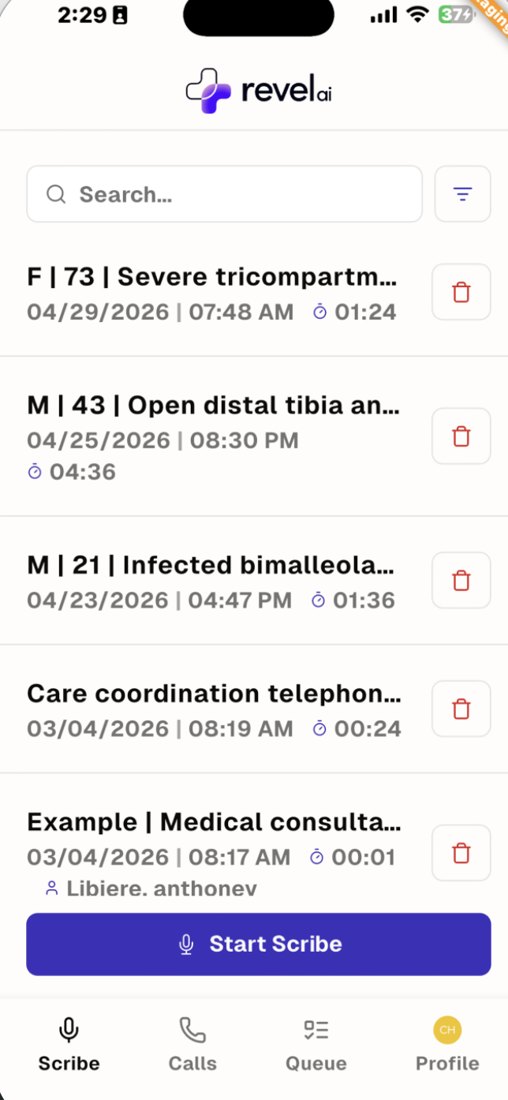
Your visit list lives on your phone.

Open the app and your recent encounters are there: the 73-year-old tricompartmental knee, the open tibia, the infected bimalleolar. Each with its recording length and timestamp.

Notice the times: a 90-second recording becomes a complete note. The scribe is built around how surgeons talk, not how EHRs think.

RevelAi scribe visit list
Step 2 · One tap to start

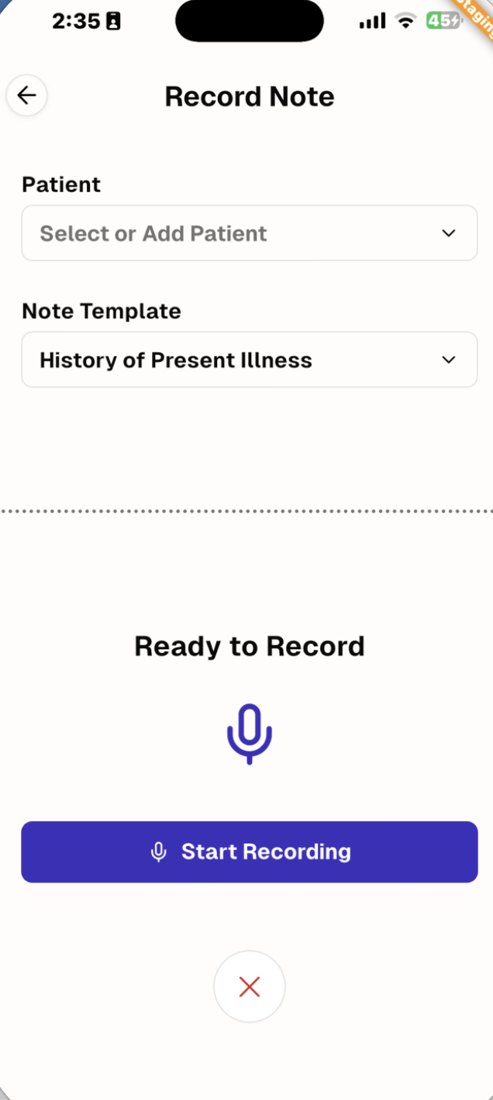
Pick the template, press record.

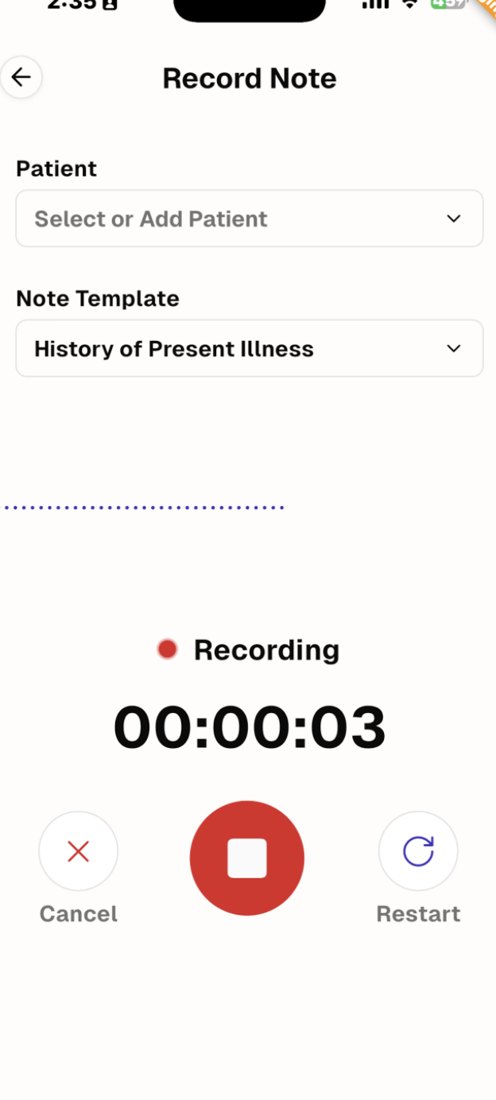
Select or add the patient, choose the note template — history of present illness, op note, follow-up — and start. No dictation grammar, no "next section." Talk the way you present a patient.

On desktop, the same scribe launches from the care platform with post-visit analyses enabled — the note feeds the record, not a silo.

Record note setup
Step 3 · The visit happens

Record. Cancel. Restart. Your call.

The recording runs while you talk with the patient or dictate afterward. Stop when done; restart if the room got loud. Nothing commits until you say so.

Recording in progress
Step 4 · The note, structured

A complete note, in your voice.

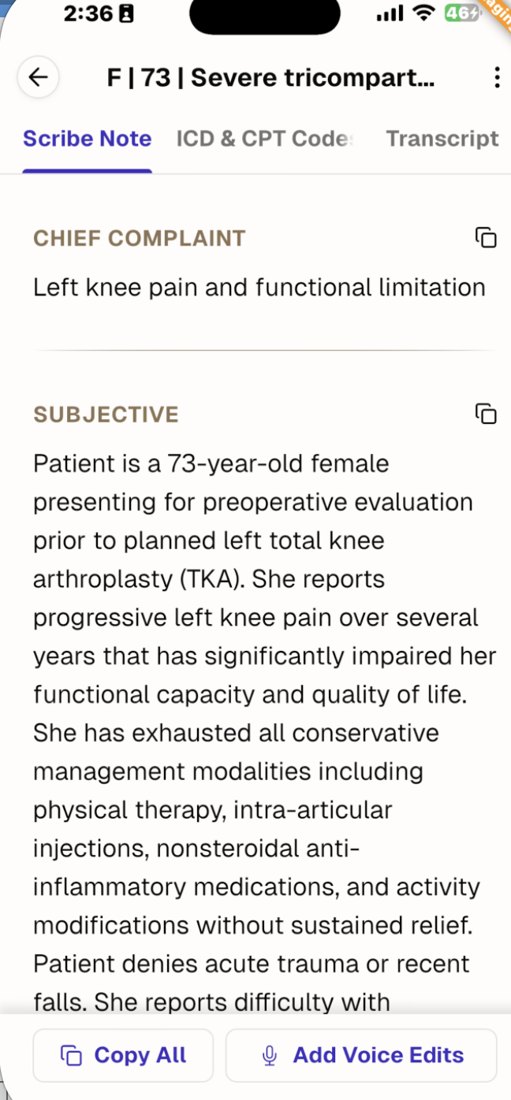
Chief complaint, subjective, exam, plan — drafted from what was said, structured for the chart. Copy a section or the whole note; add voice edits if something needs to change.

The 73-year-old's preoperative evaluation reads like a surgeon wrote it, because a surgeon dictated it. The scribe did the formatting, not the thinking.

Structured scribe note
Step 5 · The part that pays

Codes, extracted and ready to review.

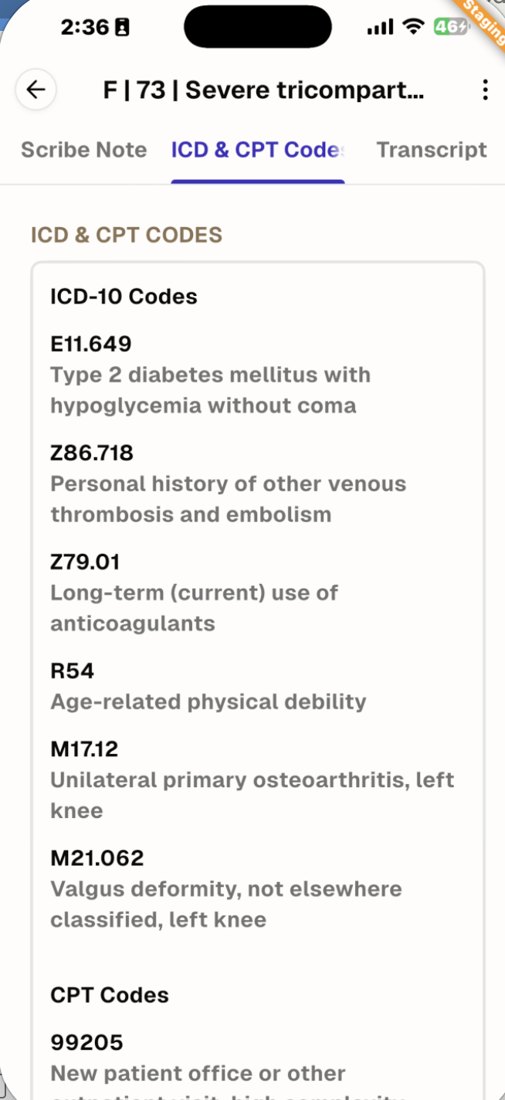
ICD-10 and CPT suggestions drawn from the encounter: the osteoarthritis and valgus deformity, and the comorbidities that matter — diabetes, anticoagulation, thrombosis history.

Under episode models, documented comorbidity feeds risk adjustment. A scribe that surfaces it at the point of care is capturing the patient's real complexity — you confirm every code before it goes anywhere.

ICD and CPT code extraction

And the note doesn't stop at the chart

Visit recordedPhone or desktop
Note + codesReviewed by you
Care journeyTasks, surveys, outreach
Episode viewRisk profile, PROs, follow-up
The bigger picture

One patient, one timeline.

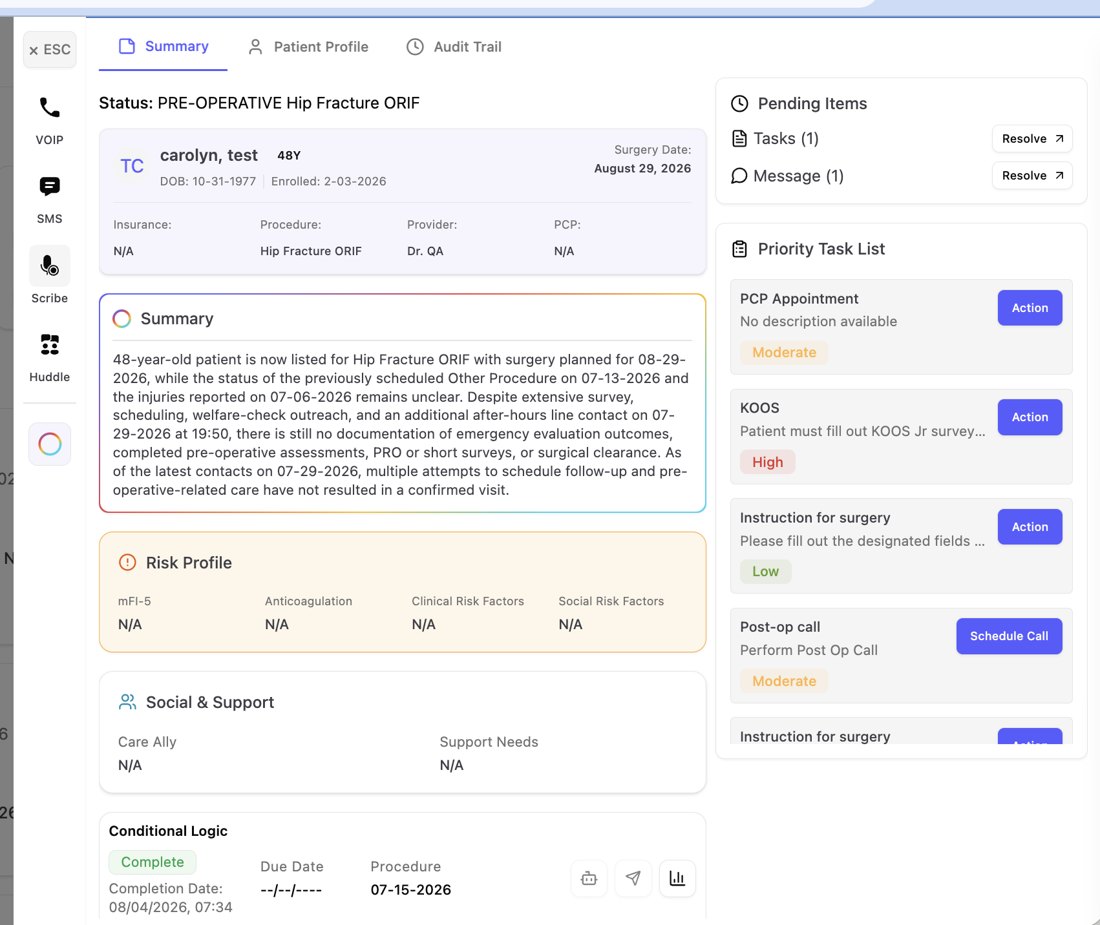
The same platform runs the patient's whole journey: the pre-op task list, the KOOS collection, the welfare-check outreach, the post-op call — with the scribe's documentation feeding the summary a coordinator sees.

This is what documentation looks like when it's part of care coordination instead of an afterthought to it.

RevelAi care platform patient summary

See it on your own patients' workflow

RevelAi Health works with orthopedic groups and health systems on ambient documentation and episode-based care coordination.

Request a demo →
Disclosure. This walkthrough sits in the Techy Surgeon section of the hub and is not part of the AAHKS education program. Christian A. Péan, MD, the program director, is a co-founder of RevelAi Health. Product screens shown are from a staging environment with test data; no real patient information appears on this page.